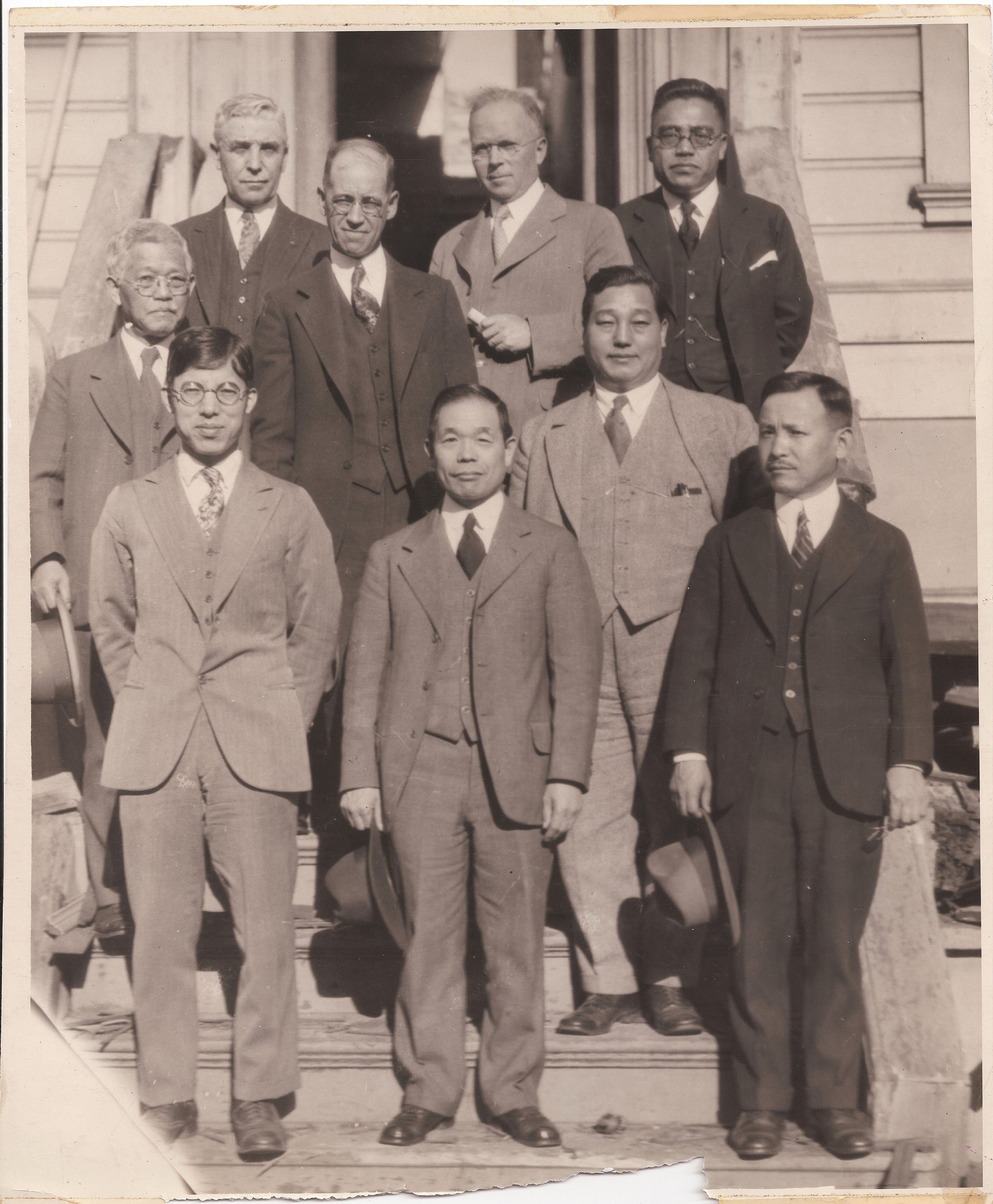
historic figures
The history of Buchanan Street YMCA is shaped not only by the building itself, but by the people who fought to establish it, rebuilt its community after World War II, and expanded its role in San Francisco.
-
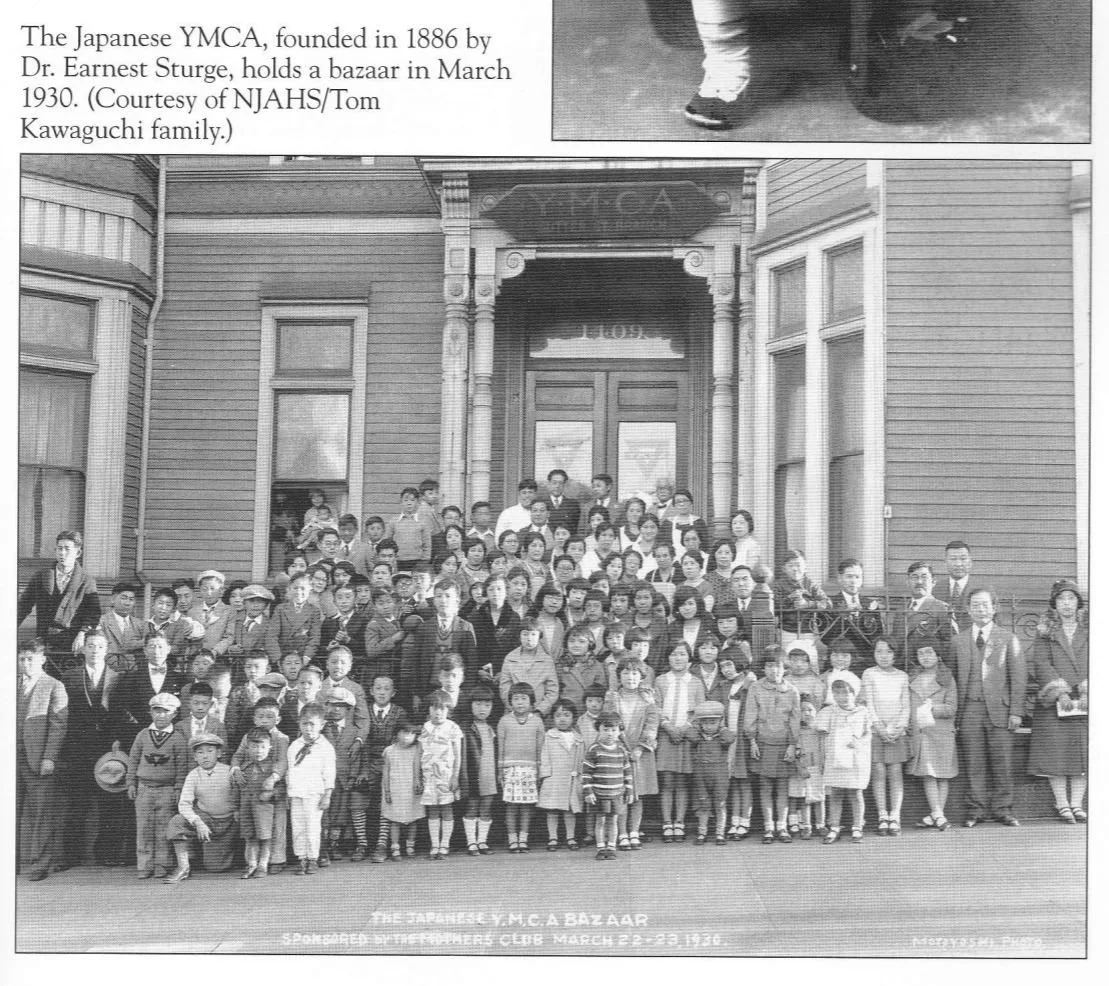
Dr. Sturge, a Presbyterian missionary who worked with San Francisco’s Japanese immigrant community, established the Japanese YMCA in August 1886. He helped create an early institutional foundation for community support, youth development, and religious and educational activities. His founding work began decades before the organization moved to Buchanan Street.
-
Kanai was a Japanese American social worker who joined the Buchanan Street YMCA in 1937. Working with young people before World War II, he helped sustain the Y’s youth programs during a period when Japanese Americans faced growing discrimination. He also spoke out against the forced removal of Japanese Americans during the war.
-
Hoshiyama was instrumental in rebuilding the YMCA after the wartime incarceration of Japanese Americans. Following his own incarceration at Topaz, Utah, he returned to YMCA work and helped lead the transition from a Japanese-focused branch to the Buchanan YMCA, a community-based organization open to people of different backgrounds. His leadership helped establish a new direction for the Y as Japantown and the Western Addition changed.
-
Wada helped make the Buchanan YMCA a bridge between Japanese American and African American communities. As executive director, he supported youth employment, community partnerships, and programs responding to the needs of young people in the Western Addition. His work extended beyond the building, connecting neighborhood organizations to opportunities and resources for local youth.
Historic locations
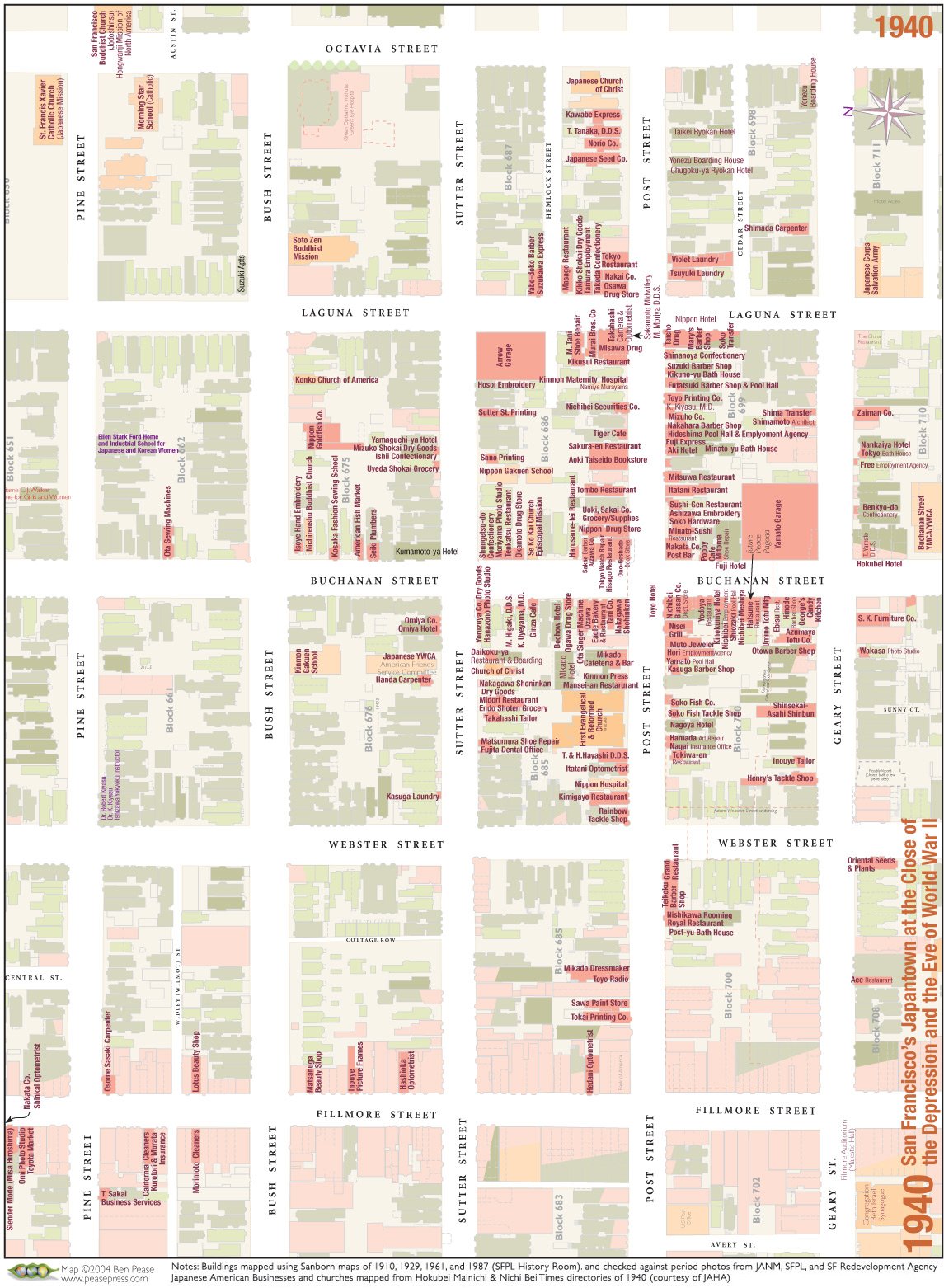
Founded in 1886 to serve San Francisco’s growing Japanese immigrant community, the Buchanan YMCA has spent more than a century adapting to the needs of its neighbors. Before finding its permanent home on Buchanan Street, the Japanese YMCA operated from several locations throughout the city, eventually moving to a residence on Sutter Street in 1926. As its membership grew, the community came together to fund a dedicated facility, raising $25,000 locally and receiving approximately $15,000 in support from Japan. The new building at 1530 Buchanan Street was dedicated in 1936, providing space for recreation, youth programs, community gatherings, and cultural activities.
During World War II, the forced incarceration of Japanese Americans profoundly affected the YMCA and its members. From 1942 to 1946, the building served as a USO facility for African American servicemen. After the war, the YMCA reopened with a renewed commitment to serving the broader neighborhood. In 1947, it became the Buchanan YMCA and introduced interracial youth programs, bringing Japanese American and African American communities together through shared activities and services.
The building endured further changes as urban redevelopment transformed the Western Addition and Japantown during the 1960s. While much of the surrounding neighborhood was demolished or reshaped, the Buchanan YMCA remained a lasting presence. Today, it continues to evolve as a community resource, supporting families through social services, food assistance, youth development, and wellness initiatives. Looking ahead, the YMCA is working to reimagine its future as a vibrant neighborhood hub, building on its history of resilience, inclusion, and community-led change to meet the needs of future generations.